
 History
History
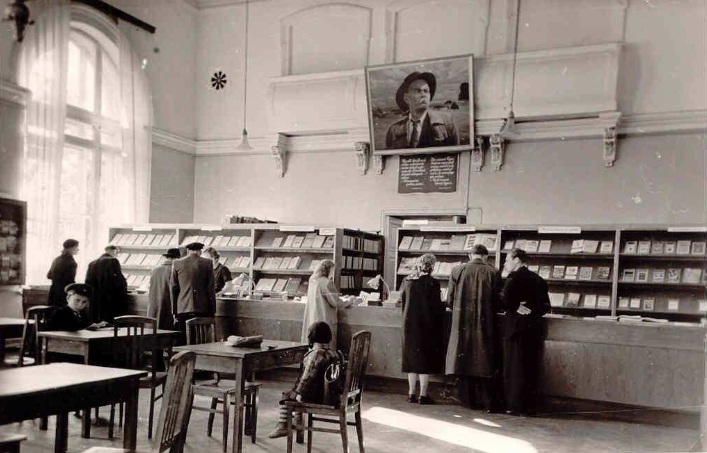
1907 – On October 14 (vkj), the Tallinn City Free Public Library and Reading Room opened its doors to readers at Nunne 2. City residents immediately began to use the library actively. By the end of the first year of operation, in just two and a half months, the collection had 2,041 books, there were 10,067 loans and 8,659 visits. In the early years of the library, 20-40 magazine titles and 20-25 newspapers could be read in the reading room with sixty seats.
1920 – moved to the house at Gogoli pst 4 (now Estonia pst 8). This representative historicist building was built in 1894-1895 for the Tallinn Russian Social Society. The author of the sketch project was academician M. Preobrazhensky (who also designed the main church of Alexander Nevsky on Toompea), the final project was prepared by the well-known architect R. Knüpffer.
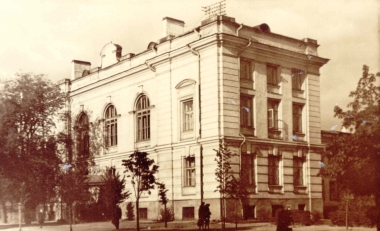
1921 – On January 15, Aleksander Sibul (1884-1981) became the director of the library. Under his leadership, the previous reading room grew into the largest public library in Estonia with several departments and branch libraries. In addition to managing his own library, Aleksander Sibul was actively involved in the development of Estonian librarianship.
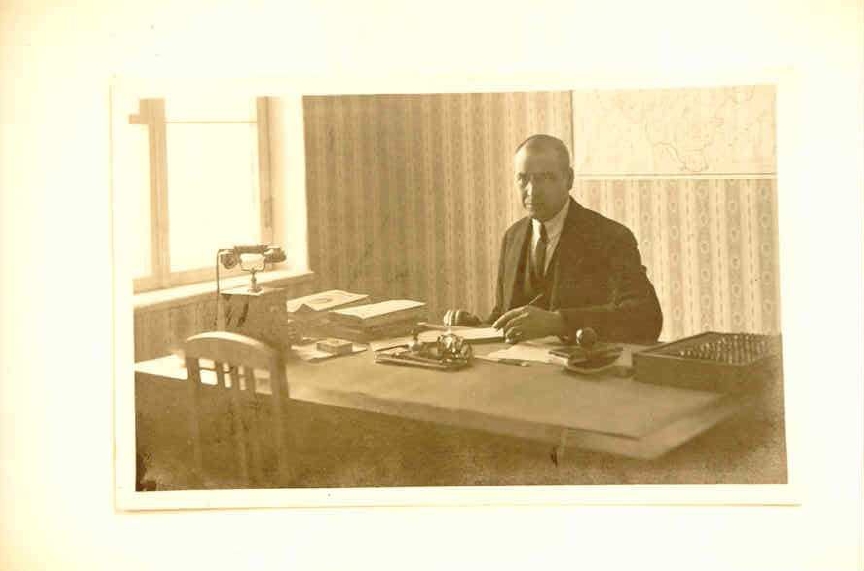
He was the author of the first Estonian-language librarianship manual, one of the founders of the Estonian Librarians’ Association and its long-time chairman, and the editor of the magazine “Raamatukogu” for over ten years.
Aleksander Sibul was a lecturer on many courses about library collection, and a large number of the public library directors of the time were his students. Aleksander Sibul was removed from his position as director in 1950.
- 96-year-old Aleksander Sibul recalls his childhood, youth, and also the opening of the Tallinn Library in 1907. →
- Additionally, you can listen to his speeches on a program that aired in 1975.
1922 – The Nõmme Library was founded as the library of the Nõmme local society “Ühendus”. 2002. the library turned 80 years old and new, modern premises were opened in the annex of Nõmme Primary School.
1923 – Literature began to be loaned home.
1925 –The library acquired the functions of the central library of Estonia, which led to increased state support and the receipt of legal deposit copies.
1926 – Tallinn’s First Branch Library was opened in the Luther Community Center on Lõuna Street. 8. The branch library, which opened in April, is the predecessor of the current Laagna Library. 1938. In 1998, the library moved to Tartu maantee. At Lasnamäe, the Laagna Library has now been operating since June 15, 1998.
1928 – a music collection was created (in 1951 it had to be transferred to the Estonian SSR State Public Library (now the National Library).
1929 – On November 20, the Kalamaja Library began operating at Graniidi 1. Since 1941, the library has been located at Tööstuse 1, and on March 1, 2007, its doors opened at its current location at Kotzebue 9.
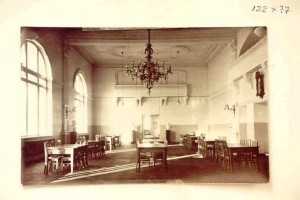
1933 – The Youth Library, which later became the Estonian Children’s Library, began operating in the library building.
1929-1940 – 32 issues of the news literature list “Tallinn Central Library Announcements” were published.
1938 – The Central Library Archive Library was opened, with the task of collecting and preserving everything in the Estonian language and related to Estonia. 1951. the collection, which had grown to 40,000 copies, was distributed because, according to new understandings, the public library did not need such a collection, and a large part of it was acquired by the current National Library.
1944 – The functions of the Estonian Central Library were transferred to the State Library of the Estonian SSR. In the post-war period, the structure of the Tallinn Central Library took shape, additional branch libraries were created, and the number of employees increased.
1946 – Tondi Library was founded.
1947 – The reference bibliography department was opened.
1947 – Pirita Library began operating. It was originally located at Merivälja tee, in a building that was demolished because of the 1980 Olympic Games. The next location was Merivälja tee 24. 2003. Since the autumn, the library has been located on the extension of first floor of the Pirita Economics High School.
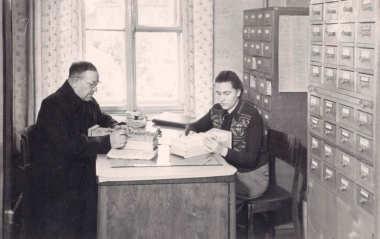
1948 – Pääsküla Library was founded. Pääsküla Library has moved its service area three times in the last couple of decades. Back in the 80s, the library was located at Pärnu mnt 444 and was called Kivimäe Library. From there, the library moved to the basement of an apartment building on Tungla Street, and from there to one wing of an apartment building on Rännaku puiestee. Since September 28, 2005, readers have been served in the first building designed for the library in Tallinn since the restoration of independence.
1951 – The Pelguranna Library was founded, operating at Kalinini Street. 77. 1963. the library moved to new premises at Kangru 13 and operated there for six years. Since 1969, the Pelguranna Library has been located at Madala 3, in the same building as the pharmacy, communications department and other service institutions. The library premises were on the second floor. 2008. In the fall, the library moved back to Kangru 13.
1953 – Kadriorg Library was founded. It was located at L.Koidula 3 until 2001. 2001. the library received renovated premises on the first floor of the A.H. Tammsaare House Museum.
1957 – Oral book propaganda became relevant, literary courts, etc. were organized, a literary and ex-librists’ circle and a fantasy club worked. The events were crowded, sometimes with more than 500 participants; they were also organized in city parks and even on Pirita beach.
1957 – The Männi Library was founded and it was named the Central District Nõmme III Library, located at Pärnu mnt 247. The library moved to Mustamäe in 1964. The Mustamäe I Library at E.Vilde tee 143 operated in the same location until 1999. The library moved to its current location, Ehitajate tee 48, in 2000, and also received a new name – the Männi Library.
1959 – 1961 switched to an open shelving system.
1960 – The Torupilli Library was founded, in premises specially built for the library. 2002. the library reopened after a long and thorough renovation and redesign of the premises.
1966 – Methodological guidance for the work of Tallinn city libraries was initiated, and two methodologists began working.
1969 – The Männiku Library was founded.
1974 – Tallinn city libraries switched to a centralized system.
1977 – a record year when the number of readers exceeded 45,000.
1982 – Väike-Õismäe Library was founded.
1982 – The current Paepealse Library is based on the Lasnamäe Children’s Library, founded in 1982.
1984 – The Sääse Library (originally Mustamäe III Library) was founded in premises specially built for the library.
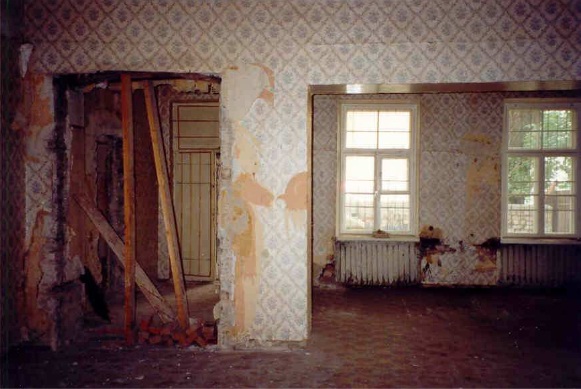
1986 – As a result of arson, a fire broke out in the main library building at Estonia pst 8, which led to the start of the long-awaited major renovation at the end of the year.
1987 – Sõle Library was founded.
1994 – The new statutes of the library were approved. Over time, the name of the library has changed several times – first named after Maksim Gorki, then after Anton Hansen Tammsaare, and since then simply the Tallinn Central Library.
1999 – The Central Library received the former bank premises at Liivalaia 40, where the library’s foreign literature department, which was formed on the basis of the former Russian literature and foreign literature departments, moved to alleviate the lack of space in the main building.
2000 – In the summer, the renovation of the main library building at Estonia pst 8 began. The Estonian Literature Department temporarily moved to the second wing of the premises at Liivalaia 40, where readers were served.
2000 – On October 27, our library joined the ELNET Consortium and implemented the integrated library system INNOPAC.
2001 – The renovation of the main building of the Central Library was completed in the summer. The work was carried out by AS Eesti Ehitus. When renovating the building, an attempt was made to follow the original architecture, interior design and color schemes of the building as much as possible.
2002 – At the end of January, the library resumed reader services in its renovated main building. The children’s and music departments, which did not exist before, began work, and computer services were also transferred. The foreign literature department and the processing department will continue their work at Liivalaia 40.
2003 – A summer reading program for children was organized for the first time. Initially called “Reading is fun”, since 2005 the program has been called “Summer with a Book”.
2004 – On the occasion of International Children’s Book Day, an award is given to the author of an Estonian children’s or youth book published in the previous year and most read in our library in the previous year. Since 2009, the award has been named „Bookmark“ .
2004 – In November, on the 120th anniversary of the long-time director of the library, Aleksander Sibula, the Aleksander SibulaScholarship was established, which was awarded until 2018. Since 2006, Aleksander Sibul’s professional day has been organized .
2005 – Pääsküla Library was founded.
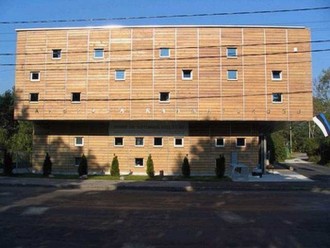
2007 – Nurmenuku Library was founded. The Nurmenuku library collection largely originates from the Salme Library, which was closed in 2006 (due to lack of space and the opening of the new, more spacious Kalamaja Library), whose collection in turn originates from the J. Tombi Cultural Palace Library, which was founded in 1940 and transferred to the Tallinn Central Library in 1991.
2008 – The first gift book for first graders was published, the title of the book was „Omad jutud“.
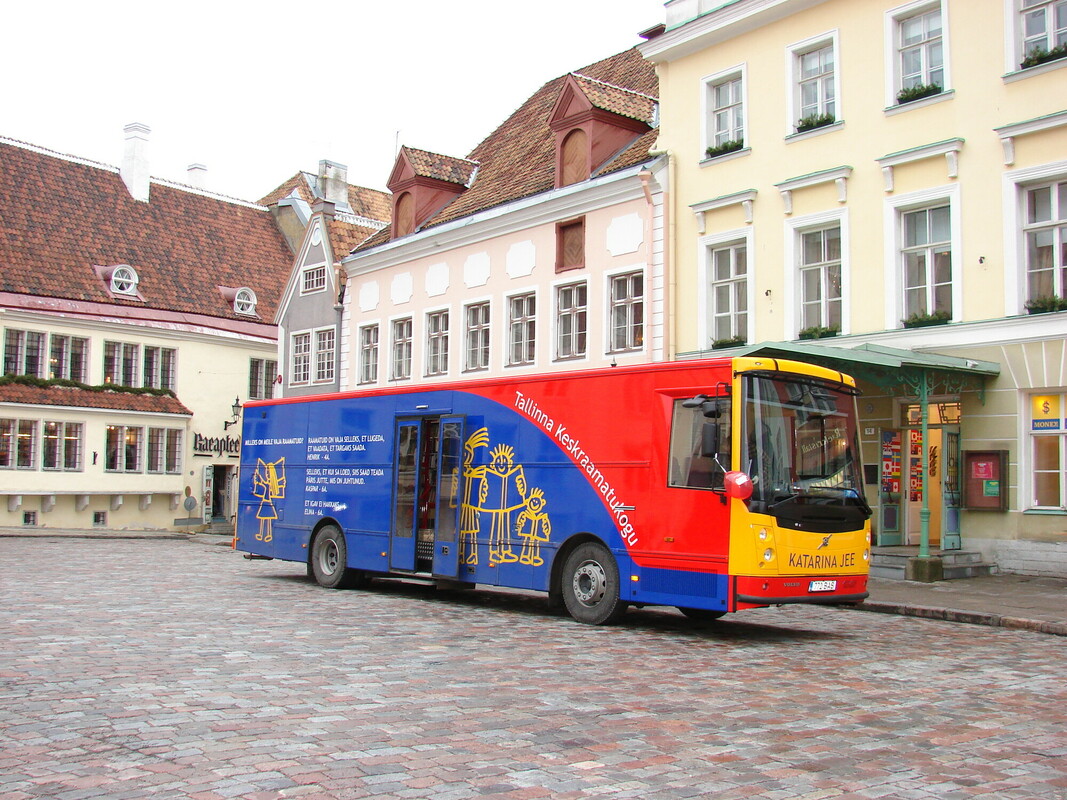
2008 – The library got its own library bus, which was named Katarina Jee.
2010 – the library began to involve volunteers.
2011 – The music department, in collaboration with the NGO Chamber Musicians, organizes the concert series “Chamber Music in Tallinn”.
2012 – On January 31, readers could start borrowing e-books under copyright protection from the e-book borrowing and reading environment ELLU.
2012 – an annual adult reading program began called „Welcoming spring with a book“.
2012 – The creation of a comic book collection began in the fall. The Paepealse Library has a wide selection of comics, manga, and graphic novels for children, young people, and adults.
2013 – On Mother Language Day, the Tallinn Central Library made the e-library ELLU available to Estonian schools located abroad.
2013 – On International Book Day, April 23, a campaign aimed at children and young people under 18 was launched called „Free with a book“.
2013 – A library literature blog was created in October called “Reading experiences”.
2014 – For the Year of Movement, sports equipment was available for loan from the Kalamaja, Kännukuke, Nurmenuku, Nõmme, Paepealse, Pelguranna and Pirita branch libraries. The selection includes walking sticks, pedometers, heart rate monitors, basketball, football, jump rope, various exercise games and much more.
2015 – In February, the Tallinn Central Library and Contra children’s book “Everyone is the Smartest” was selected as one of the 25 most beautiful Estonian books of 2014; in March, the book received the Cultural Endowment’s annual award in the children’s and youth literature category; in May, the work was named the winner of the Karl Eduard Sööd Award
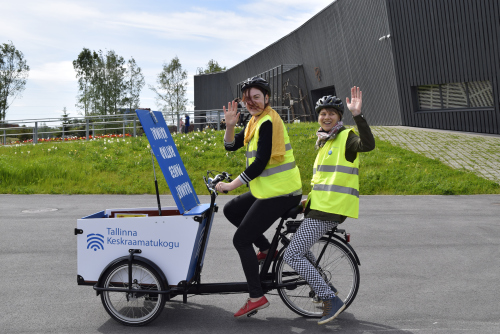
2015 – On June 1, the library introduced the library bike to the city’s residents for the first time. The library bike was donated to our library by the Espoo City Library in Finland.
2015 – On June 2, the library presented its new logo. The logo was designed by designer Markko Karu.

2015 – Newspapers can be borrowed from branch libraries from 1 July.
2016 – On 20 January Sõle library sewing room was opened where, in addition to a sewing machine, there is a large table for drawing patterns and a steam iron.
2016 – In May, Aleksander Sibula’s “Librarian’s Handbook” was digitised, which was the first Estonian-language handbook describing the organisation of libraries and the tasks of librarians and giving practical advice.
2016 – On 11 March 2016 , the project “Skype Book Club” of Tallinn Central Library’s Foreign Language Literature Department was selected as the winner of the Charlemagne Youth Prize for Estonia.
2016 – From 13 June, the new rules for the use of the Tallinn Central Library come into force. The long-awaited possibility for readers to add themselves to the waiting list for books has also come into force. Under the previous rules, readers could borrow up to ten audio and video recordings at a time, but from now on up to fifteen. The library will no longer charge a fee for a book for young children in block letters that has been damaged by a child up to the age of 6 (inclusive).
2017 – In January, the Tallinn Central Library started to regularly send book boxes to kindergartens. With the launch of a new service called “Miti the Bee’s Book Bag in the Kindergarten“, the Central Library started celebrating the Year of Culture for Children and Youth in its libraries.
2017 – On 15 May, the music department of Tallinn Central Library opened “Instrument chest“, where you can borrow musical instruments and accessories for free. The selection includes folk instruments (small zither, folk zither, jew’s harp, jauram), guitars in various sizes, violins and accordions, recorders, ukuleles, melodicas, digital pianos, various percussion instruments and Orff instruments. As far as accessories are concerned, the “Instrument chest” offers music stands, their lights and metronome sounders.
2017 – On 15 May, the City of Tallinn awarded the Order of Merit to Kaie Holm, Director of Tallinn Central Library, for her great contribution to the development of librarianship and for her long and successful leadership of Tallinn Central Library.
2017 – On 22 May, the OverDrive eLibrary was launched , an eLibrary of audio and e-books in English and Russian, offering the possibility to read and listen to borrowed e-books without an internet connection.
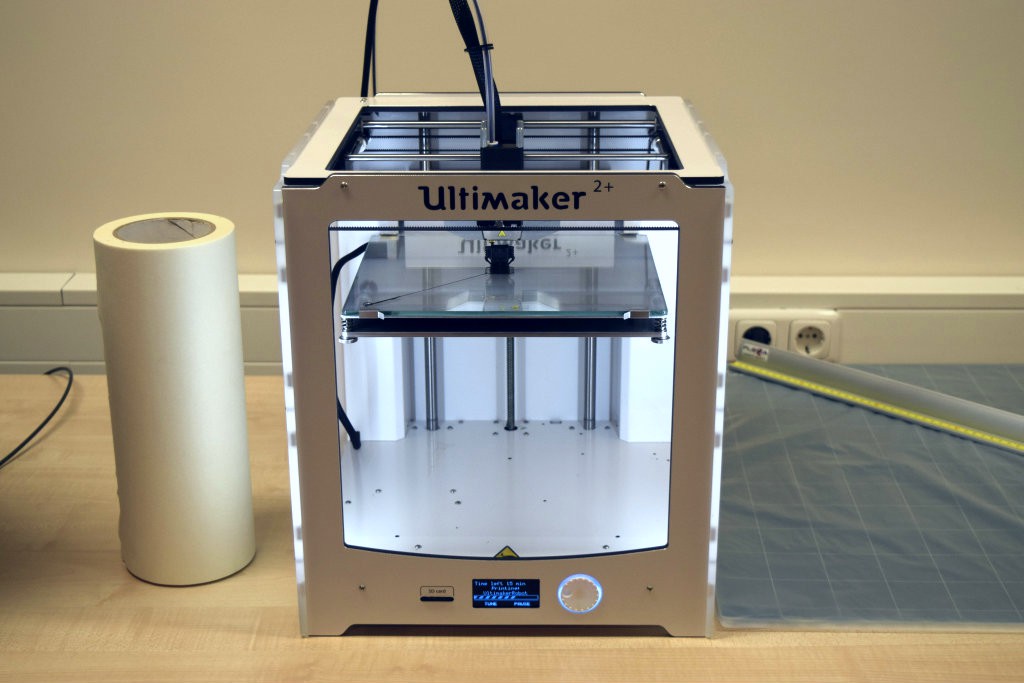
2017 – On 12 October, an innovation lab was opened in the Kännukuke library. The lab features an Ultimaker 2+ 3D printer, a WACOM Cintiq 22HD graphics board, a Roland GS-24 guillotine cutter and a Siser TS-BASE thermal press. In addition to the equipment in the Innovation Lab, the children’s Bee-bot honeybee robots, Edison robots and Makey Makey inventor kits are available for programming in the Kännukuke library.
2018 – Tallinn Central Library organised the project “Art in the Library” as a gift from Estonian libraries for the 100th anniversary of the Republic of Estonia.
2018 – “Let’s read ourselves to the top of the tower” reading programme for children and young people. The “Let’s Read Our Own Book” reading programme was complemented by the idea of the “Book Tower” by German children’s author Ursel Scheffler. As a result, in the anniversary year of the Republic of Estonia, the classes were able to read themselves to the top of Pikk Hermann, one of the most important symbols of our country’s independence, the tallest tower of Toompea Castle.
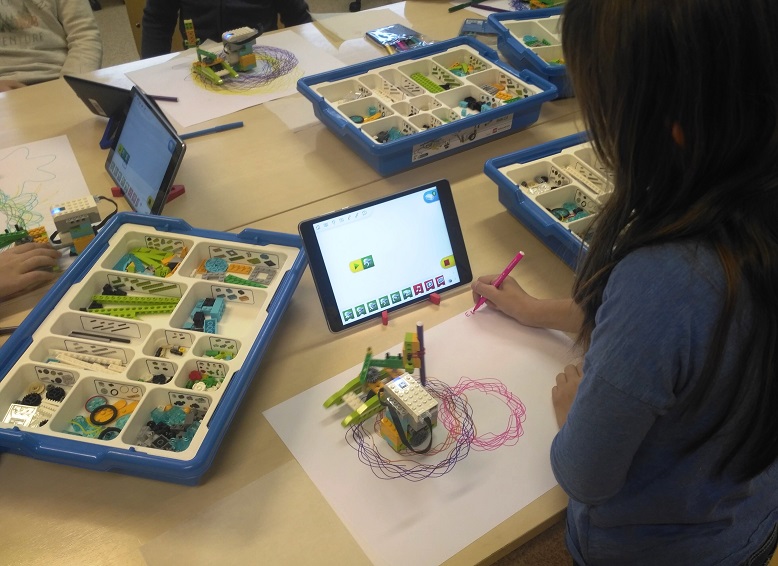
2019 – New robotics classes started. In January, the Paepealse library started a robotics group “Ozobots Read” for girls aged 10-17. In Nõmme library, a robotics circle for children aged 8-13 started in February.
2019 – A series of events to support older people’s social inclusion and daily social activity started in September “A happy senior in the library“. The series consisted of chat evenings, workshops, memory exercises and games mornings.
2019 – Campaign launched on December “Born to Read“, inviting families to come to the library to celebrate their young child’s first library card as a festive event.
2020 – In the context of the nationwide COVIDI emergency, Tallinn Central Library opened its eLibraries to all Estonian residents on 18 March.
2020 – On 23 March, the “Let’s Read Aloud” reading programme was launched, with librarians inviting children to read books to children by phone, Skype and Facebook.
2020 – The seed chest was opened at the Laagna library (Võru 11).
2020 – From September onward, books will be available for delivery to DPD parcel machines.
2021 – The Reading Aloud programme won the European Citizenship Award 2020.
2021 – Pelguranna Library opened its Toolbox in July.
2021 – Tik-Tok profile was created to the library in the summer. As of July 2024 tik-tok.com/@keskraamatukogu.ee channel has 1096 followers and 24 800 likes.
2021 – The music department was renamed the Music and Movie Hall.
2022 – Museum deck service. As of 3 May, you will be able to borrow free of charge joint tickets for Tallinn City Museum and Tallinn Literary Centre from Kalamaja and Kadriorg libraries.
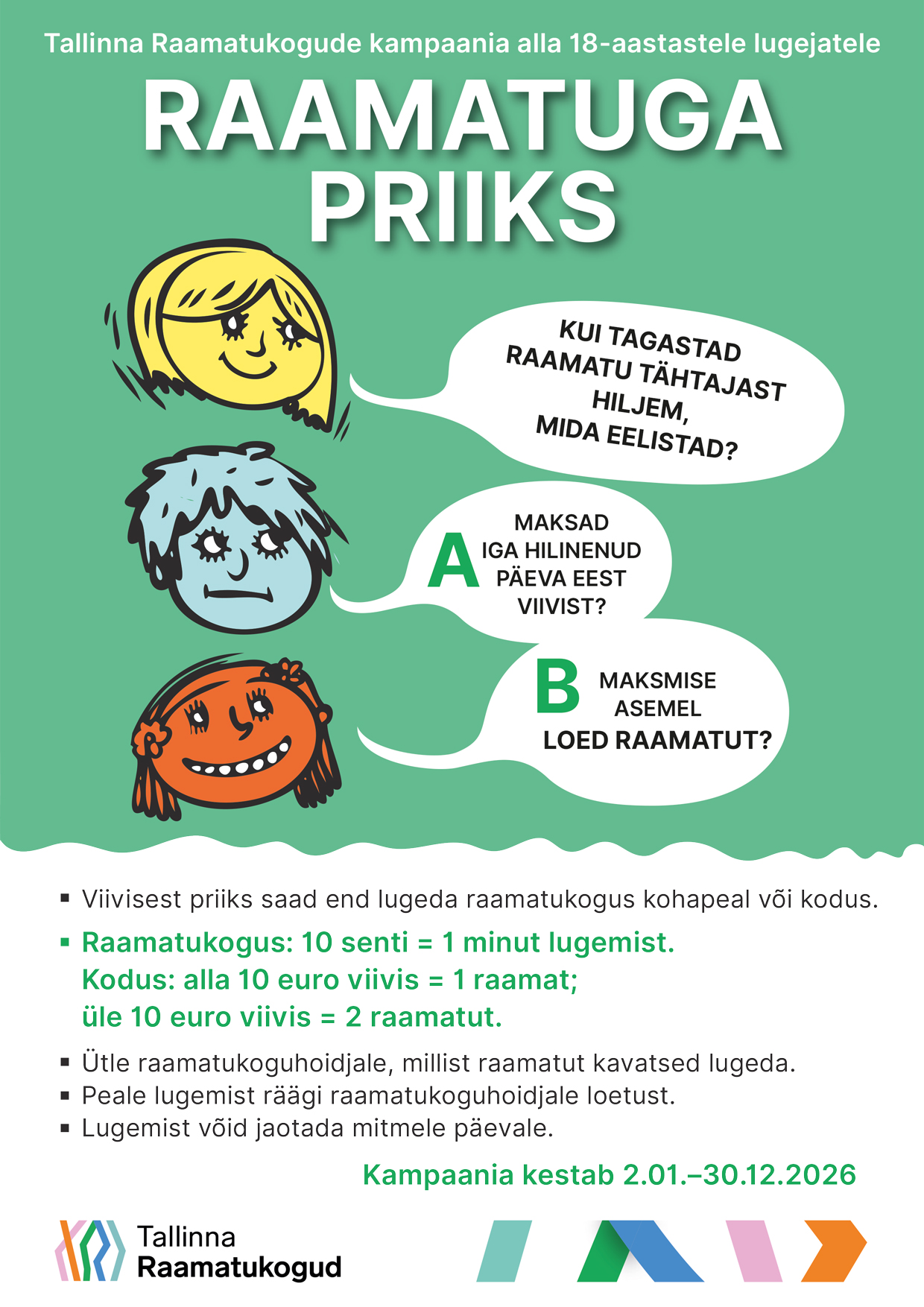
2022 – 08.08: The “Free with a book” campaign, which received a lot of media attention, was launched. If you have missed the deadline for returning your books, you can choose to either pay a late fee or read the book. When reading in the library, the calculation is based on 10 cents = 1 minute of reading. Register the starting and ending time of the reading with the librarian. After reading a book, talk to the librarian about the book you have read. Children and young adults under the age of 18 can qualify for the reading.
2023 – On 23 March, Kalamaja Library opens its doors to Memory Lab, where Tallinn Central Library readers can digitise old photos, documents, photo negatives and positiives for free. The new service will help people preserve their family history and pass it on to future generations.
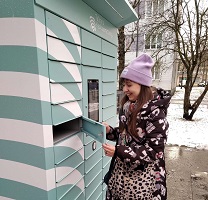
2024 – On 9 January, 24/7 lending lockers and self-service machines were opened for readers in Tallinn Central Library’s main building (Estonia pst 8), in the foreign language literature department (Liivalaia 40) and in the Kännukuke, Laagna, Pelguranna, Pirita, Pääsküla and Väike-Õismäe libraries.
2024 – February: the Tallinn Central Library and the Estonian Reading Association launch a project for children and young people called Reading Friends to encourage children with a different mother language to read books in Estonian. Little and big reading friends will work together: together they will find books they like and find interesting, read aloud and discuss what they have read. Reading buddy meetings take place in the Estonian Literature Department and the Foreign Language Literature Department.
2024 – In May, a plant exchange cabinet was opened in the Laagna library.
2024 – 1 July: the ELLU e-Library will end its more than 12 years of operation on 1 July.
2024 – 28 November: a new library bus (still called Katarina Jee) is introduced.
2024 – 28 November: Tallinn Central Library adopts the brand name Tallinn Libraries.

The Estonian Literature Department of Tallinn Central Library is renamed Tallinn Südalinna Library and the Foreign Language Literature Department is renamed Tallinn Liivalaia Library.
The facts about the activities of the library can be found in the brochure “Tallinn Central Library 1907-1995“, compiled by H. Jürman and H. Peeba, and the 100th anniversary of the library. The booklet “Tallinn Central Library 1907-2007“ (edited by literary historian Livia Viitol) is dedicated to the library’s 100th anniversary.